
Cart
0


Carats vs. Karats: What’s the Difference?

Table of Contents
- Carat vs. Karat: What's the Difference?
- What Does Carat Mean in Jewelry?
- How Is Diamond Carat Weight Measured?
- Does Carat Mean Diamond Size?
- Why Does Diamond Carat Weight Affect Price?
- What Is Total Carat Weight?
- What Does Karat Mean in Gold?
- Gold Karat Purity Chart
- Why Is Gold Measured Out of 24?
- 10K vs. 14K vs. 18K Gold: Which Should You Choose?
- Gold Karat Comparison
- Does Gold Karat Affect Color?
- What Matters More: Diamond Carat or Gold Karat?
- How to Choose a Diamond and Gold Combination
- Common Mistakes to Avoid When Comparing Carats and Karats
- Carat, Karat and Carrot: Are They Different?
- Conclusion
When shopping for an engagement ring, you may come across descriptions such as 2-carat diamond, 14K yellow gold, or 18K gold setting. Although the words "carat" and "karat" sound almost identical, they describe two very different characteristics of fine jewelry.
A carat measures the weight of a diamond or gemstone, while a karat measures the purity of gold. Understanding the difference helps you interpret jewelry specifications, compare engagement rings, and decide which combination of diamond and gold is right for you.
For example, consider a 2-carat diamond engagement ring set in 14K yellow gold. The diamond weighs 2 carats, while the gold used in the setting contains approximately 58.3% pure gold. Each measurement tells you something different about the ring.
However, there's more to choosing fine jewelry than understanding these two terms. Diamond carat weight influences a stone's appearance and price, while gold karat affects its precious-metal content and the characteristics of the alloy.
In this guide, we'll explain carats vs. karats, explore the difference between diamond carat and gold karat, compare common gold purities, and share practical tips to help you make an informed jewelry purchase.
Carat vs. Karat: What's the Difference?
The easiest way to remember the distinction is to associate each word with what it measures.
- Carat (ct): The weight of a diamond or other gemstone.
- Karat (K): The purity of gold.
Although both terms appear in jewelry descriptions, they cannot be used interchangeably.
| Feature | Carat | Karat |
|---|---|---|
| What it measures | Diamond weight | Gold purity |
| Common abbreviation | ct | K or Kt |
| Measurement system | Metric weight | 24-part purity scale |
| Example | 1.50 ct diamond | 14K gold |
| What it tells you | How much the diamond weighs | How much pure gold the alloy contains |
For instance, a ring described as a 1.50-carat diamond in 18K gold has a diamond weighing 1.50 carats and a gold setting containing approximately 75% pure gold.
Neither measurement tells you everything about the ring's quality. You also need to consider the diamond's cut, color and clarity, along with the setting's design, construction and suitability for everyday wear.
What Does Carat Mean in Jewelry?
A carat is the standard unit of weight used for diamonds and many other gemstones. One metric carat equals exactly 200 milligrams, or 0.20 grams.
A carat is divided into 100 smaller units called points. This allows jewelers and gemological laboratories to describe diamond weights with considerable precision. For example, a diamond weighing 0.75 carats can also be described as a 75-point diamond. The Gemological Institute of America (GIA) explains how carat weight is measured and used when evaluating diamonds.
Here's how common diamond weights compare:
| Diamond Weight | Equivalent in Points | Weight in Grams |
|---|---|---|
| 0.25 ct | 25 points | 0.05 g |
| 0.50 ct | 50 points | 0.10 g |
| 0.75 ct | 75 points | 0.15 g |
| 1.00 ct | 100 points | 0.20 g |
| 1.50 ct | 150 points | 0.30 g |
| 2.00 ct | 200 points | 0.40 g |
| 3.00 ct | 300 points | 0.60 g |
These figures refer to the diamond's weight, not the weight of the entire ring.
How Is Diamond Carat Weight Measured?
Diamonds are weighed using highly precise scales. Because even a small difference in weight can affect a diamond's classification and price, accurate measurement is important.
Diamond weights are commonly displayed to two decimal places, such as 0.95 ct, 1.00 ct or 1.25 ct. Professional grading laboratories may measure weight to additional decimal places before reporting the appropriate rounded figure.
When reviewing a diamond grading report, pay attention to the stated carat weight rather than relying on a rounded marketing description alone.
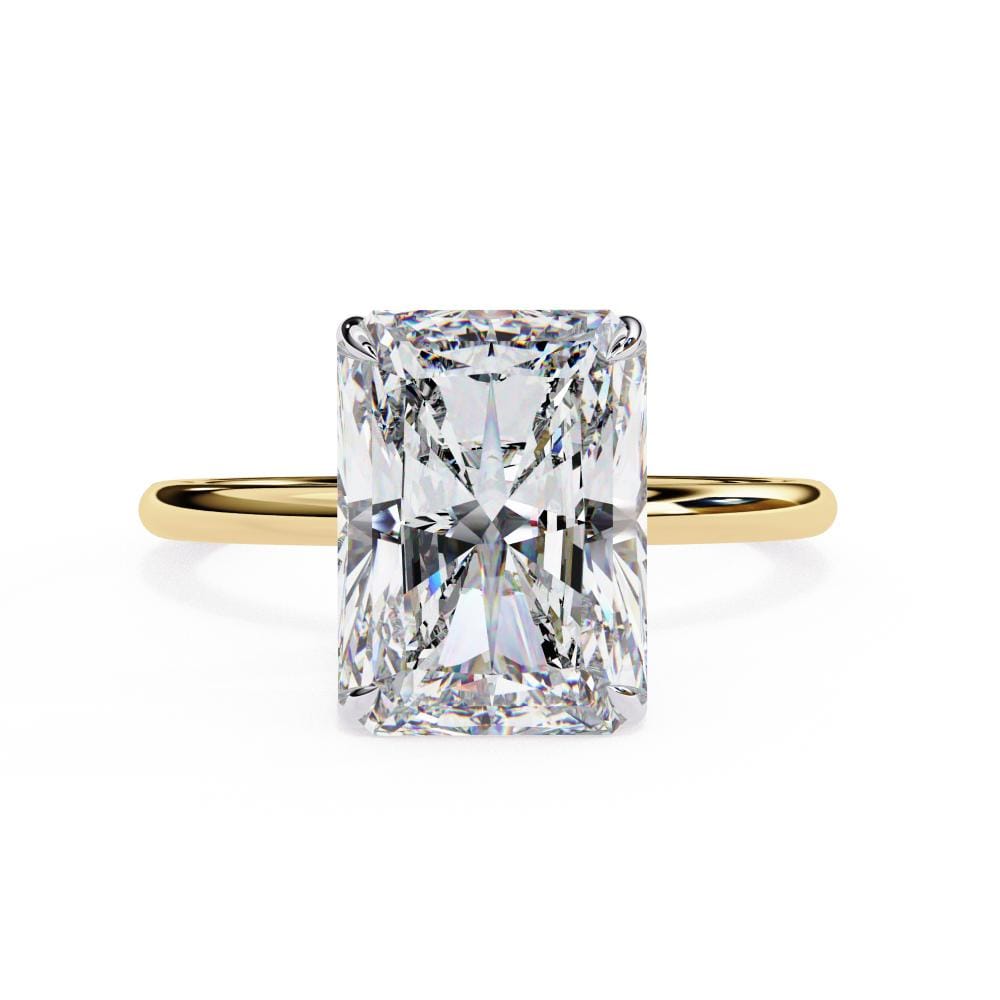


For a loose diamond, the reported weight refers to that individual stone. For a finished ring containing several diamonds, the product description may instead show the combined weight of multiple stones.
Does Carat Mean Diamond Size?
No. Carat measures weight, not physical dimensions.
This distinction is important because shoppers often assume that a heavier diamond will always look noticeably larger. In reality, a diamond's visible size depends on its shape, proportions, depth and how its weight is distributed.
Consider a 1-carat round diamond and a 1-carat oval diamond. Both weigh the same, but their outlines and face-up appearances differ because of their shapes.
Even two round diamonds with identical carat weights may look slightly different in size. A diamond that carries more weight in its depth may appear smaller when viewed from above than one with more favorable proportions.
When comparing diamonds, look at the measurements in millimeters as well as the carat weight. This gives you a better understanding of the stone's physical dimensions.
Why Does Diamond Carat Weight Affect Price?
Carat weight is an important factor in diamond pricing because larger diamonds are generally rarer than smaller diamonds of comparable quality.
However, diamond prices do not increase in a perfectly straight line with weight. Popular weight thresholds, such as 1.00, 1.50 and 2.00 carats, can influence pricing because many shoppers specifically search for stones at those sizes.
For example, a 0.99-carat diamond may look very similar in size to a 1.00-carat diamond, depending on its measurements and proportions. Yet the two stones may have different prices.
This doesn't mean a smaller diamond is always the better purchase. It means you should compare the complete specifications and appearance rather than assuming that the round-number carat weight automatically represents better value.
Most importantly, carat weight alone does not determine diamond quality. Cut, color and clarity also play significant roles in a diamond's appearance and value.
What Is Total Carat Weight?
When a piece of jewelry contains several diamonds, you may see the term total carat weight, commonly abbreviated as TCW or CTW.
Total carat weight represents the combined weight of the diamonds in a piece of jewelry. It is different from the weight of the center diamond.
Imagine an engagement ring with the following diamond arrangement:
- Center diamond: 1.00 ct
- Side diamonds: 0.30 ct combined
- Accent diamonds: 0.10 ct combined
The total diamond weight is 1.40 carats.
However, the center diamond still weighs 1.00 carat. The additional 0.40 carats come from the smaller diamonds surrounding it.
This distinction matters when comparing solitaire, halo, three-stone and pave engagement rings. Two rings may have the same total carat weight but very different designs and center-stone sizes.
Shopping tip: Check whether a product description identifies the center diamond's weight or the total carat weight of all diamonds. This makes comparisons much more meaningful.
What Does Karat Mean in Gold?
While carat refers to gemstone weight, karat describes the purity of gold.
Gold purity is measured using a scale of 24 parts. The karat number indicates how many of those 24 parts consist of gold.
For example, 18K gold contains 18 parts gold out of 24, equivalent to 75% gold by weight. The remaining 25% consists of other metals used to create the gold alloy.
Similarly, 14K gold contains approximately 58.3% gold, while 10K gold contains approximately 41.7%.
These additional metals are known as alloying metals. Depending on the formulation, they can influence the gold's color, hardness, workability and other characteristics.
Gold Karat Purity Chart
These percentages explain why two rings made from different gold karat ages can have different material compositions even when they look similar.
| Gold Type | Approximate Gold Content | Other Metals |
|---|---|---|
| 10K Gold | 41.7% | 58.3% |
| 14K Gold | 58.3% | 41.7% |
| 18K Gold | 75% | 25% |
| 22K Gold | 91.7% | 8.3% |
| 24K Gold | Approximately 99.9% | Trace impurities may remain |
For shoppers, the key point is simple: the higher the karat, the greater the proportion of pure gold in the alloy.
Why Is Gold Measured Out of 24?
The 24-part system provides a straightforward way to express gold purity.
For example:
- 24K represents the highest karat designation and is used for nearly pure gold.
- 18K means 18 of the 24 parts are gold.
- 14K means 14 of the 24 parts are gold.
- 10K means 10 of the 24 parts are gold.
You can calculate the theoretical gold percentage by dividing the karat number by 24 and multiplying by 100.
For example:
18 ÷ 24 × 100 = 75%
Therefore, 18K gold contains 75% gold by weight.
Commercial fineness marks may express the same purity in parts per thousand. For example, 750 represents 75% gold, while 585 is commonly used to mark 14K gold in many markets.
10K vs. 14K vs. 18K Gold: Which Should You Choose?
Choosing gold for an engagement ring involves more than selecting the highest karat number. You should consider gold content, durability, price, appearance and how frequently you plan to wear the ring.
10K Gold: A Practical Option
10K gold contains approximately 41.7% pure gold. Because it contains a relatively high proportion of alloying metals, it can offer useful durability for jewelry designed for regular wear.
It may also be more affordable than higher-karat gold, although actual prices depend on the ring's weight, construction, design and market conditions.
The trade-off is its lower gold content. If a higher proportion of pure gold is important to you, 14K or 18K may be more appealing.
14K Gold: A Balance of Gold Content and Everyday Wear
14K gold contains approximately 58.3% pure gold. It is a popular choice for engagement rings because it offers a balance of precious-metal content, durability and cost.
For someone planning to wear a ring frequently, 14K gold can be a practical option. The alloy's exact performance still depends on its composition and the design of the jewelry.
At KRK Jewels, 14K gold is one of the available options for selected ring designs.


18K Gold: Higher Gold Purity
18K gold contains 75% pure gold, giving it a higher gold content than 14K gold.
It can be an appealing choice for shoppers who prefer a greater proportion of gold in their jewelry. Depending on the alloy and design, 18K gold can also have a rich appearance.
However, higher gold content does not automatically mean that a ring is better for every lifestyle. The right choice depends on how the ring is constructed, how it will be worn and your personal preferences.
22K and 24K Gold: Very High Purity
22K gold contains approximately 91.7% gold, while commercially refined 24K gold is generally around 99.9% pure.
These high-purity options are often associated with traditional gold jewelry, investment gold and other applications where gold content is a priority.
Because pure gold is relatively soft, 22K and 24K gold are not automatically the most practical choices for every diamond engagement-ring design. The suitability of a particular alloy depends on the piece's construction and intended use.
Gold Karat Comparison
There is no universal winner. A well-made ring in the right alloy can be a better choice for your needs than a higher-karat ring that doesn't suit your lifestyle or budget.
| Consideration | 10K Gold | 14K Gold | 18K Gold |
|---|---|---|---|
| Gold Content | Lower | Moderate | Higher |
| Alloy Content | Higher | Moderate | Lower |
| Gold Material Cost | Generally lower | Generally moderate | Generally higher |
| Everyday Ring Suitability | Often suitable | Often suitable | Suitable, depending on design and wear |
| Best For | Those prioritizing practicality and price | Those seeking a balance | Those prioritizing higher gold purity |
Does Gold Karat Affect Color?
Yes, gold color is influenced by the metals used in the alloy, but karat alone does not determine the final color.
Yellow gold, white gold and rose gold can all be made in different karatages.
Yellow gold retains the familiar warm appearance associated with gold. Its precise shade depends on the alloy composition and gold content.
White gold combines gold with other metals to create a lighter-colored alloy. Many white-gold jewelry pieces also receive a rhodium coating to produce a bright white finish.
Rose gold gets its pinkish or reddish appearance primarily from copper in the alloy.
For example, 14K yellow gold and 18K yellow gold may have different shades because their gold content and alloy proportions differ. However, the exact appearance depends on the particular formulations.
When choosing a ring, consider both the karat and the color. One tells you about gold purity; the other describes the metal's appearance.
Diamond Carat vs. Gold Karat: A Real Engagement-Ring Exampley
Let's look at a hypothetical product description:
2.00 CT Oval Lab-Grown Diamond Ring in 14K Yellow Gold
Each part describes a different feature of the jewelry.
2.00 CT: The stated diamond weight is 2 carats.
Oval: The center diamond's shape is oval.
Lab-grown diamond: The diamond was created in a controlled laboratory environment rather than formed naturally in the Earth.


14K: The gold alloy contains approximately 58.3% gold by weight.
Yellow gold: This identifies the color of the setting.
Notice that the diamond and the gold are measured differently. The diamond is weighed in carats, while the gold's purity is expressed in karats.
If the ring also contains smaller diamonds along its band or around the center stone, the total diamond weight may be higher than the center diamond's weight. Always review the individual product specifications to understand what is included.
What Matters More: Diamond Carat or Gold Karat?
Neither measurement is more important in every situation because they answer different questions.
When selecting a diamond, carat weight helps you understand the stone's weight and compare options. However, the diamond's cut, color, clarity, shape and measurements are also important.
When selecting a gold setting, karat helps you understand the gold content. You should also consider the alloy, construction, setting style and suitability for your intended use.
For example, someone who wants a larger-looking center diamond might prioritize the diamond's face-up measurements and cut quality. Someone who places a high value on precious-metal content may focus more on choosing 18K gold instead of 14K.
The best engagement ring balances the characteristics that matter most to you.
How to Choose a Diamond and Gold Combination
Once you understand carats and karats, comparing engagement rings becomes easier. Here are a few practical considerations to keep in mind.
Start With Your Budget
Decide how much you want to spend on the complete ring before comparing individual specifications.
Your budget needs to account for the center diamond, any additional diamonds, the gold setting and the complexity of the design.
A larger carat weight may increase the cost, but the final price also depends on diamond quality and the ring's construction.
Choose the Diamond's Shape
Round, oval, pear, marquise, emerald, radiant, princess and cushion diamonds all have different visual characteristics.
If visible size is important to you, compare the actual measurements and proportions of different shapes rather than relying on carat weight alone.
Compare the 4Cs
The 4Cs are carat, cut, color and clarity. Together, they help describe important characteristics of a diamond.
Carat measures weight. Cut relates to how a diamond's proportions and finish influence its interaction with light. Color describes the degree of color present in a diamond, and clarity describes its internal inclusions and surface blemishes.
Looking at all four gives you a more complete picture than choosing a diamond based on weight alone.
Select a Gold Karat
Think about how often you'll wear the ring, the type of setting you prefer and how much gold purity matters to you.
14K gold is a popular everyday option, while 18K gold appeals to shoppers who prefer higher gold content.
Neither option is universally better, so consider the complete design and your personal priorities.
Review the Product Specifications
Before purchasing, confirm the center diamond's carat weight, whether any stated total carat weight includes accent stones, the diamond's available grading information and the gold karat.
Clear specifications help you compare similar rings fairly and understand exactly what you're buying.
Common Mistakes to Avoid When Comparing Carats and Karats
Even experienced jewelry shoppers can confuse these terms when reading product descriptions. Avoid these common mistakes.
Mistake 1: Assuming carat means physical size.
Carat measures weight. The diamond's measurements and proportions determine how large it looks from above.
Mistake 2: Thinking 18K gold means an 18-carat diamond.
18K refers to gold purity. A diamond's weight would be expressed separately, such as 1.80 ct.
Mistake 3: Assuming the highest carat weight means the best diamond.
A heavier diamond is not automatically more attractive or higher quality. Cut, color, clarity and proportions matter, too.
Mistake 4: Assuming higher-karat gold is always the best option.
Higher karat means higher gold purity, but the right alloy depends on the design, intended use and your preferences.
Mistake 5: Confusing total carat weight with center-stone weight.
A ring with 2.00 CTW may contain several diamonds whose combined weight is 2 carats. Its center diamond may weigh considerably less.
Mistake 6: Comparing two rings using only one specification.
A fair comparison considers the complete diamond specifications, gold purity, setting design, craftsmanship and what is included in the price.
Carat, Karat and Carrot: Are They Different?
Yes. Although the three words sound similar, they have different meanings.
- Carat: The weight of a diamond or gemstone.
- Karat: The purity of gold in the US jewelry terminology.
- Carrot: An edible root vegetable.
There is one regional distinction worth knowing: in the United Kingdom and some other markets, the spelling carat is also used to describe gold purity. In US jewelry terminology, carat generally refers to gemstone weight and karat to gold purity.
For a shopper reading US jewelry specifications, remembering ct for diamond weight and K for gold purity is a simple way to avoid confusion.
Conclusion
The difference between carat and karat is simple once you know what each term measures.
Carat (ct) tells you how much a diamond or gemstone weighs. Karat (K) tells you how much pure gold is present in a gold alloy.
Understanding both measurements makes it easier to compare engagement rings and interpret jewelry specifications. However, they are only two parts of the decision.
When choosing a diamond, consider its carat weight alongside cut, color, clarity and visible proportions. When selecting gold, consider its purity alongside the design, construction, intended use and your personal preferences.
At KRK Jewels, we believe that understanding your jewelry helps you make a more confident and informed choice. Whether you're comparing a 1-carat, 2-carat or 3-carat diamond, or deciding between 14K and 18K gold, knowing the difference between carats and karats gives you a stronger foundation for choosing a ring that suits your style and budget.
Take your time, compare the complete specifications, and choose the combination of diamond and gold that feels right for you.
FAQS
What is the difference between a carat and a karat?
A carat measures the weight of a diamond or gemstone, while a karat measures the purity of gold. One carat equals 0.20 grams, whereas 18K gold contains approximately 75% pure gold.
Is carat the same as karat?
No. Although the words sound alike, they refer to different measurements. Carat is used for gemstone weight, while karat is used for gold purity in US jewelry terminology.
How much does one carat weigh?
One metric carat equals 200 milligrams, or 0.20 grams. A 2-carat diamond therefore weighs 0.40 grams.
How many points are in one carat?
One carat contains 100 points. For example, a 0.50-carat diamond is also described as a 50-point diamond.
Does a higher-carat diamond look bigger?
Not always. A higher carat weight means a heavier diamond, but its visible size depends on shape, proportions and depth. Compare measurements in millimeters as well as carat weight.
Does a higher carat diamond cost more?
Generally, larger diamonds cost more when other quality factors are comparable. However, price also depends on cut, color, clarity, shape and market demand.
What does 14K mean on a ring?
14K means the gold alloy contains approximately 58.3% pure gold by weight. The remaining percentage consists of other metals.
What does 18K mean on a ring?
18K gold contains 18 parts gold out of 24, equivalent to 75% pure gold by weight.
Is 14K or 18K gold better for an engagement ring?
Both can be good choices. 14K gold offers a practical balance of gold content and everyday durability, while 18K gold contains more pure gold. The best choice depends on your preferences, lifestyle, design and budget.
Is 24K gold better than 18K gold?
24K gold has a higher gold content, but pure gold is relatively soft. For many engagement-ring designs, an alloy such as 14K or 18K may be more suitable. The right choice depends on the jewelry's intended use and construction.
Can a ring have both a carat and a karat measurement?
Yes. A 2-carat diamond in 14K gold has a diamond weighing 2 carats and a gold setting containing approximately 58.3% gold.
What does total carat weight mean?
Total carat weight is the combined weight of the diamonds in a piece of jewelry. It should not be confused with the weight of the center diamond alone.
Does gold karat affect the color of a ring?
Gold color depends on the gold content and the alloying metals used. Yellow, white and rose gold can be produced in different karatages, although the precise shade depends on the alloy formulation.
What should I check before buying a diamond engagement ring?
Review the diamond's carat weight, cut, color, clarity, shape and measurements. Also check the gold karat, setting design, product specifications and available grading documentation.
See What our Customers Say
Still Thinking? Read our Guarantee & Shop with Confidence
Written & Reviewed by

Recent Post


