
Cart
0

Ring Settings: A Complete Guide to Diamond Engagement Ring Settings

Table of Contents
- What is a Ring Setting?
- Main Ring Setting Types
- Solitaire Setting
- Toi et Moi Setting
- Three-Stone Setting
- East-West Setting
- Basket Setting
- Cathedral Setting
- Tension Setting
- Halo Setting
- Hidden Halo Setting
- Pavé Setting
- Bezel Setting
- Bar Setting
- Cluster Setting
- Trellis Setting
- Channel Setting
- Flush Setting
- Half-Bezel Setting
- Split Shank Setting
- Shared Prong Setting
- Accent Setting
- Side-Stone Setting
- How to Choose the Right Ring Setting
- How Ring Settings Affect Diamond Sparkle
- Ring Settings for Different Diamond Shapes
- How to Care for Your Ring Setting
- Can You Change an Engagement Ring Setting?
- How Much Does a Ring Setting Cost?
- Conclusion
Choosing an engagement ring involves more than selecting the right diamond shape and carat weight. The ring setting plays an equally important role in how the diamond looks, how securely it is held, how much sparkle it produces, and how comfortable the ring is for everyday wear.
From timeless solitaire settings to modern east-west designs, there are many ways to showcase a center diamond. Some settings maximize light exposure, while others prioritize protection and durability. Certain designs create the appearance of a larger diamond, while others add sparkle through carefully placed accent diamonds.
Whether you are shopping for a natural-looking lab-grown diamond engagement ring, a moissanite engagement ring, or a classic diamond design, understanding different ring settings can make your decision much easier.
In this guide, we explain the most popular diamond ring settings, how they work, what they look like, and which type may be right for your lifestyle and diamond shape.
What is a Ring Setting?
A ring setting is the metal structure that holds the center diamond and any additional diamonds securely in place. It includes the components around the center stone as well as the parts of the ring that connect the setting to the band.
The setting affects several important characteristics of an engagement ring, including the diamond's visibility, protection, light exposure, height above the finger, and overall appearance.
For example, a prong setting leaves more of the diamond exposed, helping maximize its visual presence and light entry. A bezel setting surrounds the edge of the diamond with metal, providing additional protection and a smooth profile.
It is also helpful to understand the difference between a ring setting and a ring style. A prong or bezel describes how a diamond is secured, while solitaire, halo, three-stone, and Toi et Moi describe how diamonds are arranged in the overall design.
Main Ring Setting Types
Choosing the right ring setting is just as important as selecting the diamond itself. The setting determines how the center stone is secured, how much light reaches the diamond, the overall appearance of the ring, and even its everyday durability. From classic solitaire designs to intricate halo and bezel settings, each style offers a different balance of beauty, protection, and personality. Understanding the most popular ring setting types can help you choose an engagement ring that complements your diamond, lifestyle, and personal style.
1. Solitaire Setting
A solitaire setting features one primary center diamond and minimal additional diamond decoration. Because there are few distractions around the center stone, the diamond beomes the main focus of the ring.


Solitaire engagement rings are commonly paired with four- or six-prong settings, although other mounting options can also be used. The simple design works particularly well for shoppers who want a timeless ring that can easily coordinate with different wedding bands.
A solitaire setting can also make the center diamond appear more prominent because there are no surrounding diamonds competing for attention.
| Feature | Solitaire Setting |
|---|---|
| Diamond arrangement | One main center diamond |
| Appearance | Classic and minimalist |
| Sparkle | Primarily from the center diamond |
| Main advantage | Keeps attention on the center diamond |
| Best for | Timeless and versatile engagement rings |
| Popular diamond shapes | Round, oval, cushion, pear, radiant, emerald |
| Maintenance | Generally straightforward |
2. Toi et Moi Setting
The Toi et Moi setting features two prominent diamonds positioned together, usually facing or complementing each other. The name means “you and me,” making this design particularly meaningful for couples who want a ring with a symbolic connection.


The two diamonds may be identical in shape or intentionally different, depending on the design. Their arrangement creates a balanced but distinctive appearance compared with a traditional solitaire.
Toi et Moi rings can be designed with prongs, bezels, or other diamond-setting techniques, allowing the style to range from classic to contemporary.
| Feature | Toi et Moi Setting |
|---|---|
| Diamond arrangement | Two prominent diamonds |
| Appearance | Romantic and distinctive |
| Main advantage | Strong symbolic design |
| Sparkle | High |
| Best for | Couples wanting an unconventional engagement ring |
| Design flexibility | High |
| Maintenance | Depends on the individual setting |
3. Three-Stone Setting
A three-stone setting features a center diamond accompanied by two side diamonds. The center diamond is generally larger, while the side diamonds provide additional brilliance and balance.

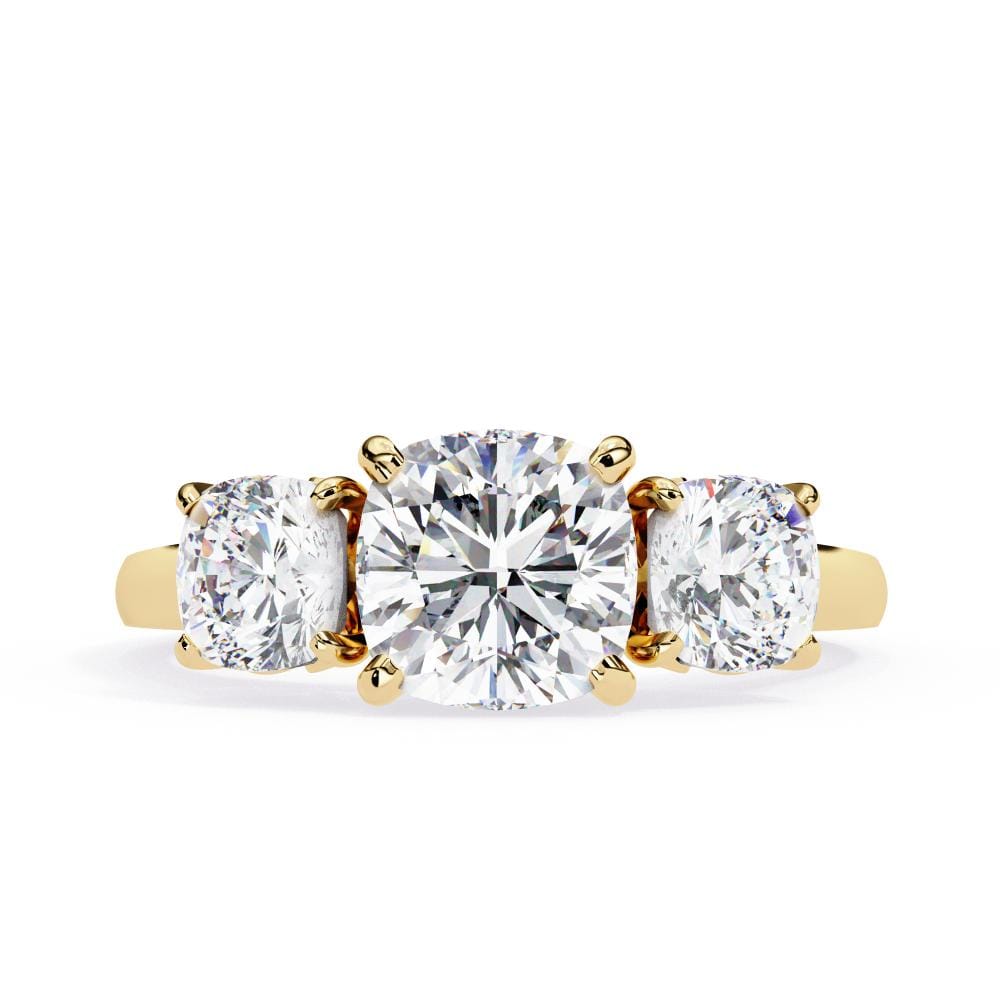

This setting is popular because it combines meaningful symbolism with a substantial diamond appearance. The three diamonds can represent a couple's past, present, and future, although the symbolism is ultimately personal.
Three-stone engagement rings are available in many combinations of diamond shapes and proportions, making them highly customizable.
| Feature | Three-Stone Setting |
|---|---|
| Diamond arrangement | Center diamond + two side diamonds |
| Appearance | Balanced and substantial |
| Main advantage | Adds side sparkle and symbolism |
| Sparkle | High |
| Best for | Meaningful and statement-making designs |
| Popular side diamonds | Round, baguette, pear, marquise |
| Maintenance | Regular inspection is recommended. |
4. East-West Setting
An east-west setting places an elongated diamond horizontally across the finger rather than in the traditional vertical orientation. This orientation gives a familiar diamond shape a completely different appearance.


Oval, emerald, radiant, marquise, and other elongated shapes can work particularly well in an east-west design.
| Feature | East-West Setting |
|---|---|
| Diamond orientation | Horizontal |
| Appearance | Modern and distinctive |
| Main advantage | Creates a unique presentation |
| Sparkle | Depends on diamond shape and setting |
| Best for | Non-traditional engagement rings |
| Popular shapes | Oval, emerald, radiant, marquise |
| Maintenance | Depends on the setting used |
5. Basket Setting
A basket setting uses a framework of metal beneath the center diamond. Horizontal and vertical supports connect the prongs, creating a basket-like structure that helps stabilize the diamond.
This design provides the open appearance associated with prong settings while adding structural support beneath the center stone.


Basket settings can be especially useful when the ring design requires additional support around the center diamond.
| Feature | Basket Setting |
|---|---|
| Structure | Supporting metal framework beneath the diamond |
| Appearance | Classic and structured |
| Main advantage | Additional support |
| Diamond exposure | High |
| Best for | Center diamonds requiring stable support |
| Sparkle | High when paired with open prongs |
| Maintenance | Periodic prong inspection |
6. Cathedral Setting
A cathedral setting features curved metal shoulders that rise toward the center diamond, creating an elevated and architectural appearance.


The raised structure helps emphasize the center diamond and can create attractive side-profile details. Cathedral settings are often paired with solitaire, pavé, or accent-diamond designs.
Because the center diamond is elevated, buyers should consider their lifestyle and comfort preferences when choosing this style.
| Feature | Cathedral Setting |
|---|---|
| Structure | Raised arches supporting the center diamond |
| Appearance | Elegant and architectural |
| Main advantage | Emphasizes the center diamond |
| Diamond height | Generally elevated |
| Best for | Classic and sophisticated designs |
| Sparkle | High depending on the setting and diamond cut |
| Consideration | Higher profile may be more exposed to snagging |
7. Tension Setting
A tension setting holds the diamond between two sections of the metal band using carefully engineered pressure. This creates the visual effect that the diamond is floating above the ring.


The open construction exposes a significant portion of the diamond and gives the ring a distinctly modern appearance.
Because tension settings require precise engineering, they are generally best purchased from an experienced jeweler and may be more difficult to resize than conventional designs.
| Feature | Tension Setting |
|---|---|
| Diamond support | Pressure from the metal band |
| Appearance | Floating and contemporary |
| Main advantage | Unique modern presentation |
| Diamond exposure | Very high |
| Best for | Modern engagement ring designs |
| Resizing | Can be challenging |
| Maintenance | Professional inspection recommended |
8. Halo Setting
A halo setting surrounds the center diamond with a circle or frame of smaller accent diamonds. The additional diamonds increase overall sparkle and can create the visual impression of a larger center stone.

Emerald Halo with Lotus Prong Engagement Ring

Oval Vintage Halo Engagement Ring

Unique Oval Halo Engagement Ring
Halo designs can be delicate or dramatic depending on the size and number of accent diamonds.
A halo works with many center diamond shapes, making it one of the most versatile engagement ring styles.
| Feature | Halo Setting |
|---|---|
| Diamond arrangement | Accent diamonds surround the center diamond |
| Appearance | Glamorous and sparkling |
| Main advantage | Enhances the center diamond's appearance |
| Sparkle | Very high |
| Best for | Buyers wanting maximum visual impact |
| Popular center shapes | Round, oval, cushion, pear, radiant |
| Maintenance | Requires attention to smaller accent diamonds |
9. Hidden Halo Setting
A hidden halo setting places smaller accent diamonds beneath the center diamond rather than forming a visible frame around it from the top.

Emerald Cut Hidden Halo Engagement Ring

Princess Solitaire with Hidden Halo Engagement Ring

Hidden Halo Pear with Pave Engagement Ring
From above, the ring can look similar to a solitaire, while the hidden diamonds become visible from the side or at different viewing angles. This makes hidden halo rings ideal for someone who wants subtle extra sparkle without the full appearance of a traditional halo.
The hidden halo can also add decorative detail to the gallery area underneath the center diamond.
| Feature | Hidden Halo Setting |
|---|---|
| Accent diamond placement | Beneath the center diamond |
| Appearance | Subtle from the top, sparkling from the side |
| Main advantage | Adds hidden detail without changing the clean top view |
| Sparkle | High from side angles |
| Best for | Buyers who prefer understated glamour |
| Center diamond focus | Strong |
| Maintenance | Periodic inspection of accent diamonds |
10. Pave Setting
A pave setting uses numerous small diamonds positioned closely together along the surface of the band or another part of the ring. Tiny metal beads or prongs hold the diamonds in place.

Cushion Double Claw Prong with Pave Band Engagement Ring

Radiant Mystic Secret Halo with Pave Engagement Ring

Princess Hidden Halo with Pave Band Engagement Ring
When viewed together, the closely arranged diamonds create an almost continuous surface of sparkle.
Pave settings are frequently combined with solitaire, halo, cathedral, and other engagement ring designs.
| Feature | Pavé Setting |
|---|---|
| Diamond placement | Small diamonds set closely together |
| Appearance | Continuous sparkle |
| Main advantage | Adds substantial brilliance |
| Sparkle | Very high |
| Best for | Diamond bands and detailed engagement rings |
| Metal visibility | Low |
| Maintenance | Regular inspection recommended |
11. Bezel Setting
A bezel setting surrounds the outer edge of the diamond with a thin metal rim. Unlike prongs, which hold the diamond at specific points, a full bezel provides continuous metal coverage around the diamond's perimeter.

Oval Solitaire with Calliope Bezel Floating Engagement Ring

Pear Solitaire with Bezel Set Engagement Ring

Round Solitaire with Bezel Set Engagement Ring
This design offers strong protection for the diamond's edges and creates a smooth, modern appearance. Because the metal covers part of the diamond's edge, slightly less of the stone may be visible compared with an open prong setting.
Bezel settings are particularly attractive for people who want a secure, streamlined engagement ring suitable for active everyday wear.
| Feature | Bezel Setting |
|---|---|
| Diamond support | Metal rim surrounds the diamond's edge |
| Appearance | Smooth and modern |
| Main advantage | Excellent edge protection |
| Diamond exposure | Moderate |
| Best for | Everyday and active lifestyles |
| Snag resistance | Excellent |
| Maintenance | Generally straightforward |
12. Bar Setting
A bar setting positions diamonds between narrow vertical metal bars. The bars separate and secure the diamonds while leaving portions of the stones exposed.


This setting provides more openness than a traditional channel while maintaining a structured appearance.
Bar settings can be used for side diamonds, bands, and designs containing multiple diamonds.
| Feature | Bar Setting |
|---|---|
| Diamond support | Vertical metal bars hold the diamonds in place |
| Appearance | Clean and structured |
| Main advantage | Balances openness with secure support |
| Sparkle | Moderate to high |
| Best for | Diamond bands and multi-diamond designs |
| Metal visibility | Moderate |
| Maintenance | Periodic inspection recommended |
13. Cluster Setting
A cluster setting groups multiple smaller diamonds closely together to create one concentrated design.


Instead of relying on one large center diamond, a cluster design uses several diamonds to create a bold overall appearance. The diamonds can be arranged in circular, floral-inspired, geometric, or other decorative patterns.
Cluster rings are useful for buyers who want substantial sparkle and a distinctive design.
| Feature | Cluster Setting |
|---|---|
| Diamond arrangement | Multiple diamonds grouped closely together |
| Appearance | Bold and decorative |
| Main advantage | Creates a substantial visual effect |
| Sparkle | High |
| Best for | Distinctive engagement rings |
| Design flexibility | Very high |
| Maintenance | Regular inspection recommended |
14. Trellis Setting
A trellis setting uses crossing metal elements or prongs beneath the center diamond. Viewed from the side, the metal often creates an interwoven or lattice-like appearance.
The crossed structure provides support while maintaining an open look around the center stone.
Trellis settings are particularly attractive when the side profile of the ring is important to the buyer.
| Feature | Trellis Setting |
|---|---|
| Structure | Crossing metal supports |
| Appearance | Interwoven and elegant |
| Main advantage | Decorative side profile |
| Diamond exposure | High |
| Best for | Classic designs with architectural detail |
| Sparkle | High |
| Maintenance | Regular cleaning and inspection |
15. Channel Setting
A channel setting places multiple diamonds inside a continuous groove in the metal band. The metal walls on either side help hold the diamonds securely without individual prongs separating each stone.


The result is a smooth, structured appearance with diamonds appearing in a neat row.
Channel settings are commonly used for wedding bands and accent sections of engagement rings.
| Feature | Channel Setting |
|---|---|
| Diamond placement | Diamonds set inside a metal channel |
| Appearance | Smooth and structured |
| Main advantage | Protects diamond edges |
| Sparkle | Moderate to high |
| Best for | Diamond bands and accent sections |
| Snag resistance | High |
| Resizing | Can be more complicated |
16. Flush Setting
A flush setting places the diamond directly into the metal so that the top of the diamond sits close to or level with the surface.
Because the diamond does not sit prominently above the band, flush settings offer a smooth and low-profile appearance. This makes them practical for everyday wear and for people who prefer minimal snagging.
Flush settings are particularly common in bands and understated diamond rings.
| Feature | Flush Setting |
|---|---|
| Diamond placement | Embedded directly into the metal |
| Appearance | Low-profile and sleek |
| Main advantage | Durable design for everyday wear |
| Diamond exposure | Lower |
| Best for | Active lifestyles and minimalist designs |
| Snag resistance | Excellent |
| Sparkle | Moderate |
17. Half-Bezel Setting
A half-bezel setting uses metal around only part of the diamond's edge rather than completely surrounding it.
This creates a balance between the protection of a bezel and the openness of a prong-style design. More of the diamond remains visually exposed while the metal still provides support along selected sections of the stone.
Half-bezel designs are particularly appealing for modern engagement rings.
| Feature | Half-Bezel Setting |
|---|---|
| Diamond support | Partial metal rim secures sections of the diamond's edge |
| Appearance | Modern and streamlined |
| Main advantage | Balances protection and diamond visibility |
| Diamond exposure | Higher than a full bezel |
| Best for | Contemporary engagement rings |
| Sparkle | High |
| Maintenance | Periodic inspection recommended |
18. Split Shank Setting
A split shank setting features a band that divides into two or more sections as it approaches the center diamond.

Oval Halo with Split Shank Engagement Ring

Pear Hidden Halo with Split Shank Engagement Ring

Round Hidden Halo with Split Shank Engagement Ring
The separation creates additional visual space around the center and can make the ring appear wider or more elaborate. Split shank designs can also incorporate pavé or accent diamonds for additional sparkle.
| Feature | Split Shank Setting |
|---|---|
| Band design | Divided or separated shank |
| Appearance | Detailed and dimensional |
| Main advantage | Adds visual width and character |
| Sparkle | Depends on diamond accents |
| Best for | Statement engagement rings |
| Design flexibility | High |
| Maintenance | Depends on diamond detailing |
19. Shared Prong Setting
A shared prong setting allows neighboring diamonds to share a prong between them. This reduces the amount of visible metal between individual diamonds and creates a more continuous appearance.


Shared prongs are commonly used for diamond bands, pavé-style designs, and rings containing rows of accent diamonds.
| Feature | Shared Prong Setting |
|---|---|
| Diamond support | Neighboring diamonds share prongs |
| Appearance | Clean and continuous |
| Main advantage | Less visible metal between diamonds |
| Sparkle | High |
| Best for | Diamond bands and accent sections |
| Metal visibility | Low |
| Maintenance | Regular prong inspection |
20. Accent Setting
An accent setting uses smaller diamonds to complement the center diamond. These accent diamonds can appear beside the center stone, along the shoulders of the band, beneath the center setting, or as part of decorative elements.
Accent settings are highly versatile because the additional diamonds can be arranged in different shapes and patterns. Round, baguette, marquise, and pear-shaped accent diamonds can all create different visual effects.


For example, the KRK JEWELS Accent Engagement Rings collection includes designs featuring different center diamond shapes and complementary accent-diamond arrangements.
| Feature | Accent Setting |
|---|---|
| Diamond placement | Beside, around, beneath, or along the band |
| Appearance | Detailed and sparkling |
| Main advantage | Adds extra brilliance without overpowering the center diamond |
| Sparkle | Medium to high |
| Best for | Buyers wanting more detail than a solitaire |
| Accent shapes | Round, baguette, marquise, pear |
| Design flexibility | Very high |
21. Side-Stone Setting
A side-stone setting features additional diamonds positioned beside the center diamond, usually along the shoulders of the ring.


Unlike a traditional three-stone design, side-stone arrangements can use smaller diamonds distributed along the band rather than two prominent diamonds directly flanking the center.
Side-stone designs are a great choice for shoppers who want additional sparkle while keeping the center diamond visually dominant.
| Feature | Side-Stone Setting |
|---|---|
| Diamond placement | Alongside the center diamond and/or shoulders |
| Appearance | Elegant and detailed |
| Main advantage | Adds side sparkle |
| Sparkle | Medium to high |
| Best for | More elaborate engagement rings |
| Popular side diamonds | Round, baguette, pear, marquise |
| Maintenance | Regular inspection recommended |
How to Choose the Right Ring Setting
Choosing the right ring setting depends on more than appearance. Consider your diamond shape, lifestyle, desired sparkle, maintenance preferences, budget, and wedding-band plans.
Consider Your Lifestyle
If you lead an active lifestyle or frequently work with your hands, a lower-profile or more protective setting may be preferable. Bezel and flush settings offer smooth surfaces and help reduce the chances of catching the ring on clothing.
If you prioritize maximum diamond visibility and sparkle, an open prong setting may be more appealing.
Consider Your Diamond Shape
Different diamond shapes interact differently with ring settings. Pointed shapes such as pear and marquise benefit from appropriate protection around their tips. Elongated shapes such as oval, emerald, and radiant can create distinctive looks in east-west settings.
Consider Your Desired Sparkle
If maximum brilliance is your priority, consider settings that expose more of the diamond or incorporate additional diamonds. Prong, halo, pavé, and accent designs can all create strong visual sparkle.
Consider Your Wedding Band
Some engagement rings have a setting that allows a wedding band to sit flush against the engagement ring, while others have a raised center or decorative structure that may create a gap.
Think about the complete bridal set before purchasing the engagement ring.
Consider Maintenance
Rings containing many small accent diamonds may require more frequent inspection than a simple solitaire. Ask how the diamonds are secured and whether the setting can be easily cleaned and maintained.
How Ring Settings Affect Diamond Sparkle
The ring setting can influence how much of a diamond is visible and how much light can enter it.
Open settings such as prongs generally expose more of the diamond, which can help showcase its brilliance. Halo and pavé designs can increase the total amount of sparkle by adding numerous smaller diamonds around the ring.
By contrast, bezel and flush settings cover more of the diamond or position it deeper within the metal. These designs prioritize protection and a smooth appearance, although they can provide a different visual balance compared with highly open settings.
Remember that diamond cut quality remains extremely important. A setting can showcase a well-cut diamond beautifully, but the setting itself cannot compensate for poor diamond proportions or cut performance.
Ring Settings for Different Diamond Shapes
The ideal setting can vary depending on the shape of your center diamond.
| Diamond Shape | Settings to Consider | Why |
|---|---|---|
| Round | Solitaire, halo, pavé, six-prong, cathedral | Highly versatile and classic |
| Oval | Solitaire, halo, hidden halo, east-west, three-stone | Emphasizes elongated proportions |
| Pear | Prong, halo, hidden halo, east-west | Protects the pointed tip while highlighting the shape |
| Cushion | Halo, solitaire, three-stone, pavé | Works well with both classic and detailed designs |
| Emerald | Bezel, solitaire, three-stone, east-west | Highlights the clean geometry of the shape |
| Radiant | Solitaire, halo, three-stone, east-west | Works with both modern and glamorous designs |
| Princess | Prong, bezel, channel, halo | Complements the geometric outline |
| Marquise | Prong, halo, east-west, accent | Highlights the long, pointed silhouette |
The setting should complement the proportions of the diamond rather than simply follow a trend.
How to Care for Your Ring Setting
Proper care helps keep both the diamonds and the metal setting looking their best.
1. Inspect the Setting Regularly
Check the prongs, bezels, channels, and other metal components periodically. If a prong appears bent, loose, or worn, have the ring inspected by a professional.
2. Keep the Ring Clean
Oil, lotion, soap, and everyday residue can collect around diamonds and metalwork. Gentle cleaning can help restore the ring's appearance.
3. Avoid Harsh Chemicals
Remove your ring when using strong household chemicals or performing activities that could expose it to unnecessary damage.
4. Be Careful With High-Profile Settings
Cathedral, prong, and other elevated settings may be more exposed to impact or snagging. Take extra care during physical activities.
5. Schedule Professional Inspections
A jeweler can check whether the diamonds and setting remain secure and identify potential issues before a stone becomes loose.
Can You Change an Engagement Ring Setting?
Yes, in many cases an engagement ring can be reset into a different setting, although the feasibility depends on the ring's construction, center diamond dimensions, metal, and the desired new design.
For example, a solitaire may potentially be redesigned into a halo, three-stone, accent, or other setting. However, changing the setting may require a new head, additional metalwork, or a completely new mounting.
Before changing an existing ring, have a professional evaluate the center diamond and current setting. They can determine whether the diamond suits the proposed design and whether the new setting will securely accommodate it.
For a custom engagement ring, choosing the setting before production is generally easier than modifying an existing finished ring.
How Much Does a Ring Setting Cost?
The cost of a ring setting can vary considerably depending on the design, metal, diamond requirements, craftsmanship, and number of additional diamonds.
A simple solitaire setting generally requires less material and labor than an elaborate halo, pavé, or multi-diamond design. Settings with numerous small diamonds also involve additional stone-setting work.
The center diamond itself is usually a major part of the total engagement ring cost, so it is important to distinguish between the price of the setting and the price of the complete ring.
When comparing engagement rings, consider the total value rather than looking only at the setting price. A well-designed setting should securely hold the diamond, complement its shape, suit your lifestyle, and provide the appearance you want.
Conclusion
The right ring setting can transform the appearance of an engagement ring. From the simplicity of a solitaire to the brilliance of a halo, the symbolism of a three-stone design, or the modern character of an east-west setting, each option offers a different combination of beauty, security, sparkle, and wear ability.
When choosing your setting, start with the diamond shape and then consider your lifestyle, desired sparkle, maintenance needs, wedding-band compatibility, and personal style.
For shoppers interested in lab-grown diamonds and moissanite, many of the same setting options are available, including solitaire, halo, hidden halo, pavé, bezel, three-stone, accent, and side-stone designs.
The best engagement ring setting is ultimately the one that securely showcases your center diamond while matching the way you want to wear and enjoy your ring for years to come.
FAQS
What is the most popular engagement ring setting?
The solitaire setting is one of the most popular engagement ring designs because of its timeless appearance, versatility, and ability to keep attention focused on the center diamond. Prong-set solitaires are particularly common because they provide strong diamond visibility.
Which ring setting shows the most diamond?
An open prong setting generally exposes more of the center diamond than settings such as bezel or flush. Four-prong designs can leave a substantial amount of the diamond visible, while six-prong designs provide additional points of support.
What is the safest setting for a diamond?
A full bezel setting is generally considered one of the most protective options because metal surrounds the diamond's perimeter. It helps protect the edges from everyday bumps while also creating a smooth profile. However, the safest choice depends on the diamond shape, ring construction, and how the ring will be worn.
Is a bezel setting good for an engagement ring?
Yes. A bezel setting can be an excellent engagement ring choice, particularly for people who want a smooth, modern design with strong edge protection. It is also well suited to active lifestyles because there are fewer exposed metal points that can catch on clothing.
Is a prong setting good for lab-grown diamonds?
Yes. Lab-grown diamonds can be used with prong settings, just like other diamonds. Prongs allow substantial exposure of the center diamond and can create a classic, highly visible appearance. The important consideration is choosing a properly engineered setting that securely fits the diamond.
Which setting is best for a moissanite engagement ring?
Moissanite can be paired with many engagement ring settings, including solitaire, halo, bezel, pave, three-stone, hidden halo, and accent settings. A prong setting is a strong choice if you want maximum visibility, while a bezel can be preferable if protection and a smooth profile are higher priorities.
What setting makes a diamond look bigger?
Halo settings are especially effective at creating the visual impression of a larger center diamond because smaller diamonds surround the center and extend the ring's overall visual footprint. Certain cluster and accent designs can also create a substantial appearance without relying entirely on a larger center diamond.
Are six prongs better than four prongs?
Neither is automatically better for every ring. Four prongs can provide a cleaner appearance and expose more of the diamond, while six prongs add additional points of support and can emphasize the round outline of a round diamond. The best choice depends on the diamond shape, size, setting design, and personal preference.
What is the difference between a ring setting and ring style?
A ring setting generally describes how the diamond is secured, such as with prongs, a bezel, channel, flush, tension, or bar construction. A ring style describes the overall diamond arrangement or design, such as solitaire, halo, three-stone, Toi et Moi, or cluster. A single ring can combine both. For example, you can have a halo-style ring with a prong-set center diamond and pavé-set accent diamonds.
Which setting is best for everyday wear?
For everyday wear, bezel, flush, and well-designed prong settings can all be good choices depending on your lifestyle. Bezel and flush settings provide a smooth, protective profile, while prong settings offer greater diamond exposure and classic sparkle. If you frequently work with your hands, prioritize a secure setting with minimal snagging and have the ring inspected regularly.
See What our Customers Say
Still Thinking? Read our Guarantee & Shop with Confidence
Written & Reviewed by

Recent Post


